Know, before winter does, whether your tires will hold the road.
To help every driver get the right tires for their car, their driving, and the season ahead — with an honest tread and condition check, a clear quote that says exactly what's included, and fitting that's fast without being rushed. No tire is sold because it's the most expensive one on the rack; it's sold because it's the right one.
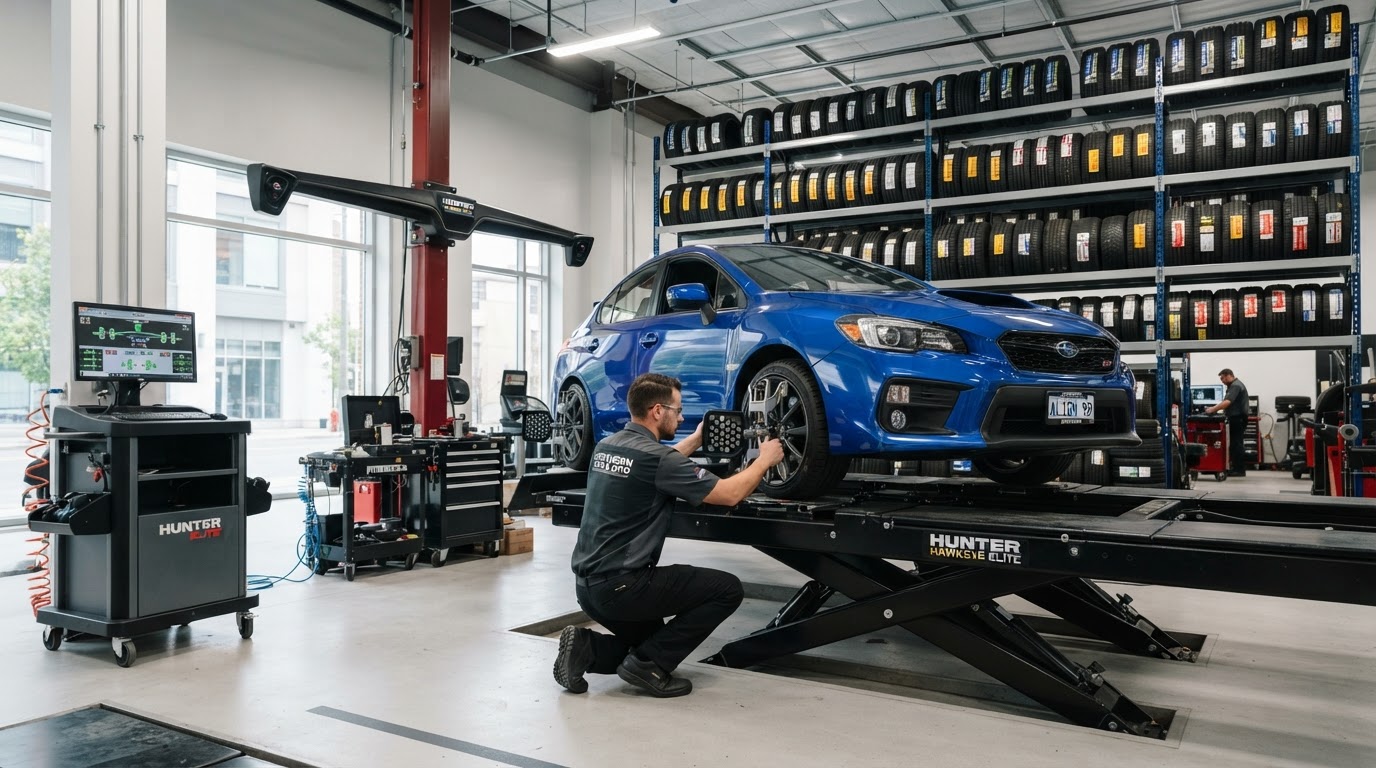
Clean, industrial fitting and digital wheel balancing setup.
Who Treadline Tire Co. is for.
Everyday drivers heading into winter — commuters, parents, and families planning holiday road trips — who want a straight answer about their tires and a quote they can compare apples to apples.
New Tire Sales & Matching
Tires matched to your car weight, commute style, and seasonal temperatures. Never pushed toward the priciest rack.
Precision Mounting & Balancing
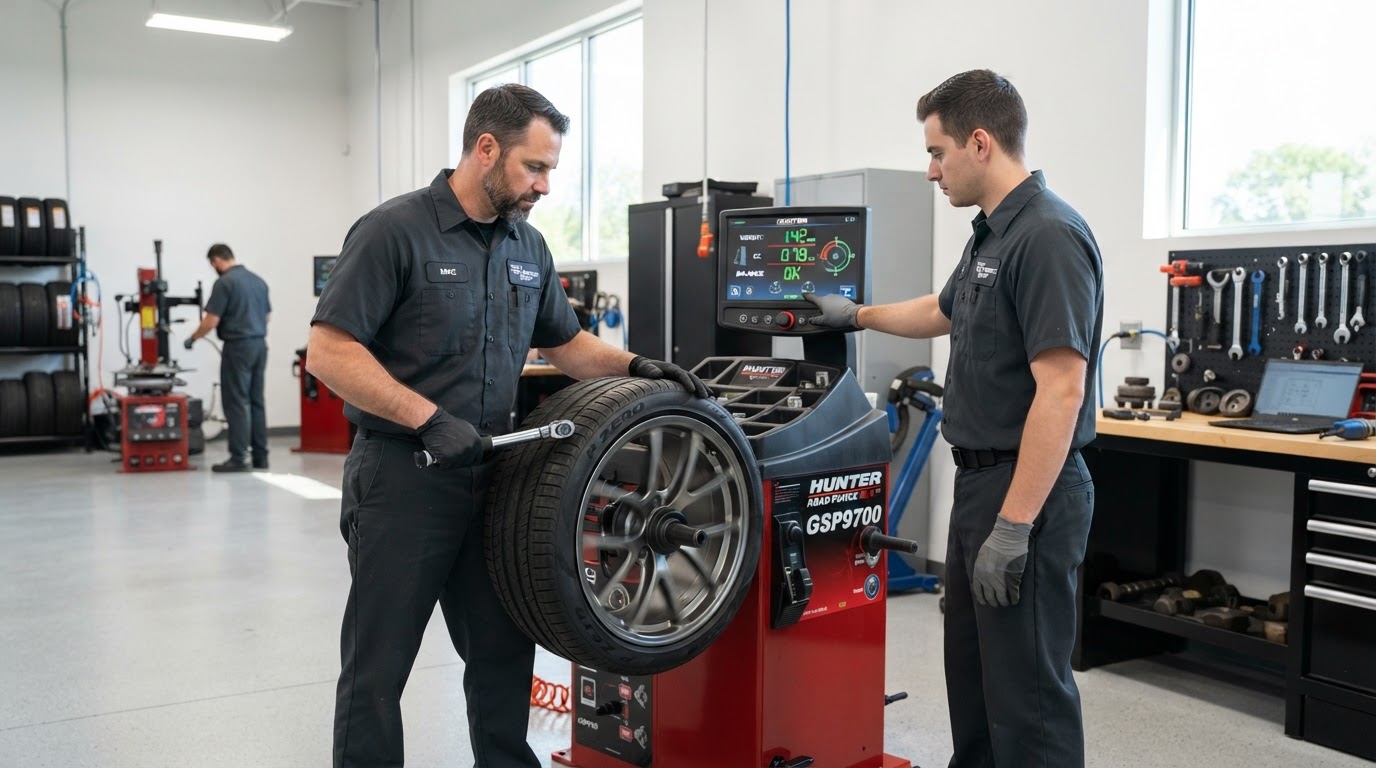
Clean alloy clamping, fresh valve stems, and computer-guided spin balancing to prevent steering wheel vibration.
Tire Rotation & Tread Wear Inspection
Systematic rotation patterns to equalize tread life across front-drive and all-wheel-drive drivetrains.
Puncture & Flat Repair
RMA-standard two-piece patch/plug inside the repairable crown area. We will never plug an unsafe shoulder or sidewall.
TPMS Sensor Diagnostics & Reset
Sensor battery health checks, stem seal replacements, and OBD/tool relearns so your dashboard warning reflects real pressure.
Wheel Alignment Checks
Laser caster, camber, and toe checks to protect new tread from cupping or feathering. (Confirm service schedule with Treadline).
No vague tire sales jargon. If your tires have two safe seasons left, we tell you to keep driving on them.
Match your real driving — not an upsell rack.
Tell us how and where you drive. This 3-step guide pinpoints the exact tire category for your safety and budget, and sends your selection straight to a real quote.
What vehicle are we fitting?
Where does your car drive most this winter?
What brings you in today?
All-Weather / Four-Season
Modern four-season tire with severe-snow certification. Superior to standard all-season rubber in cold rain, slush, and light snow without needing seasonal storage.
Slightly firmer ride over sharp bumps than purely touring-oriented sets.
Populates the quote form below with your driving profile.
Divided by purpose and real trade-offs.
No single tire is best at everything. Every tire design trades noise, tread life, and cold-weather grip. Here is what each category actually does.
All-Season Tires
Commuters, dry and wet roads, mild cold above 45°F.
Rubber hardens below 45°F, extending cold-weather braking distances.
Winter / Snow Tires
Drivers facing freezing temps, black ice, packed snow, and winter highway commutes.
Wears quickly on warm dry tarmac; requires spring changeover and off-season storage.
All-Terrain (A/T) Tires
Pickups, SUVs, gravel roads, construction job sites, and weekend trail hauling.
Heavier rolling weight, slight MPG drop, and noticeable cabin drone on smooth highway.
Performance & Summer Tires
Sport sedans, coupes, spirited highway driving above 50°F.
Hazardous below freezing; rubber can crack in freezing storage.
The honest tread check: know your depth before the road tests it.
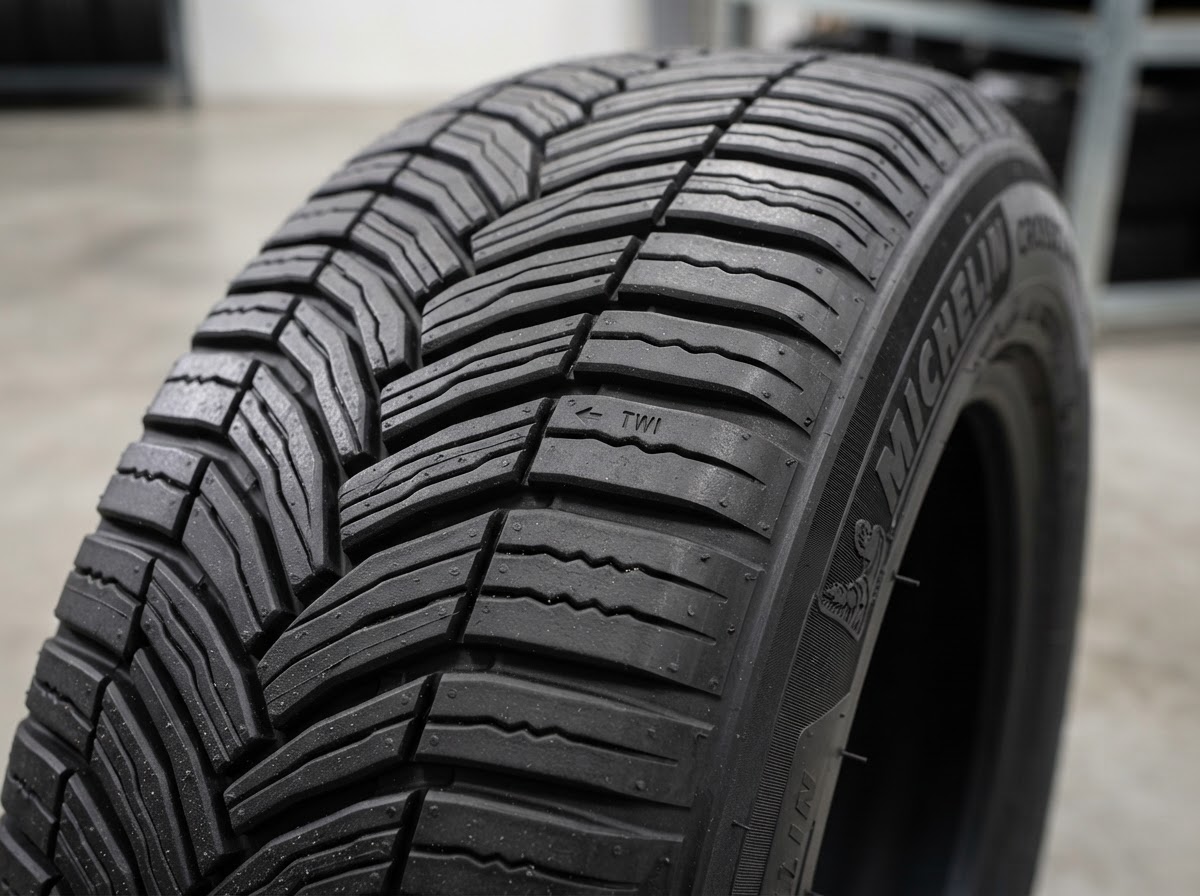
A driver who can see their own tires in these diagnostic photos trusts the quote that follows. Here is exactly what our technicians measure when checking tread depth, edge shoulder wear, and rubber age.
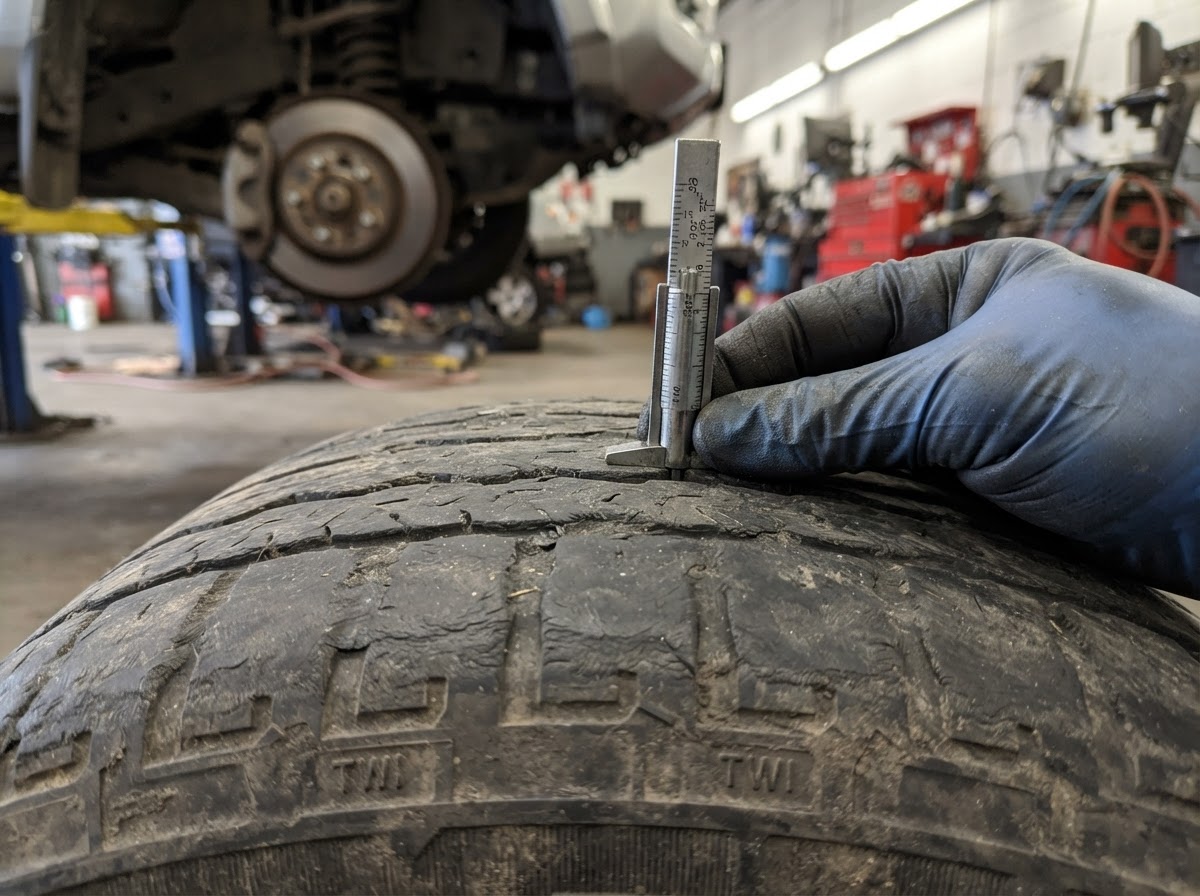
We measure inner, center, and outer tread grooves. Uneven readings show alignment or tire pressure faults.
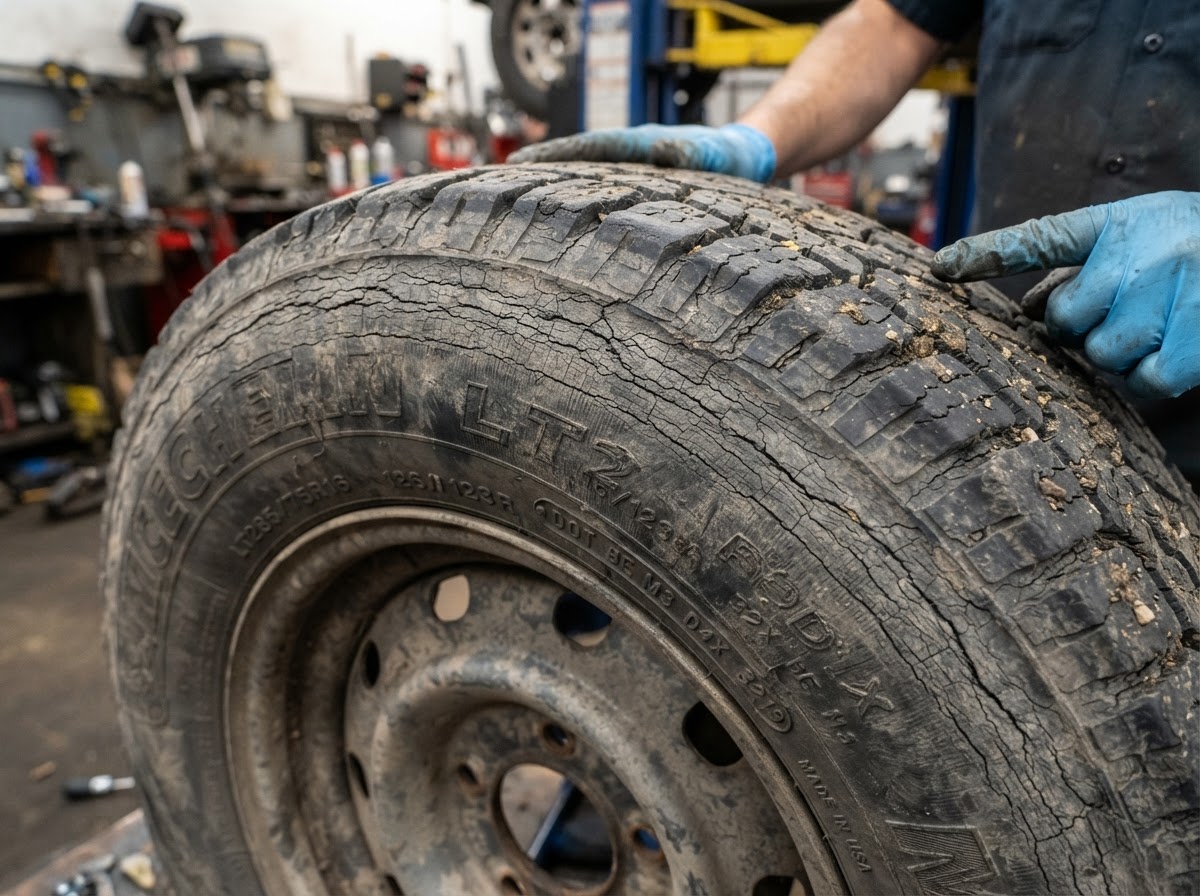
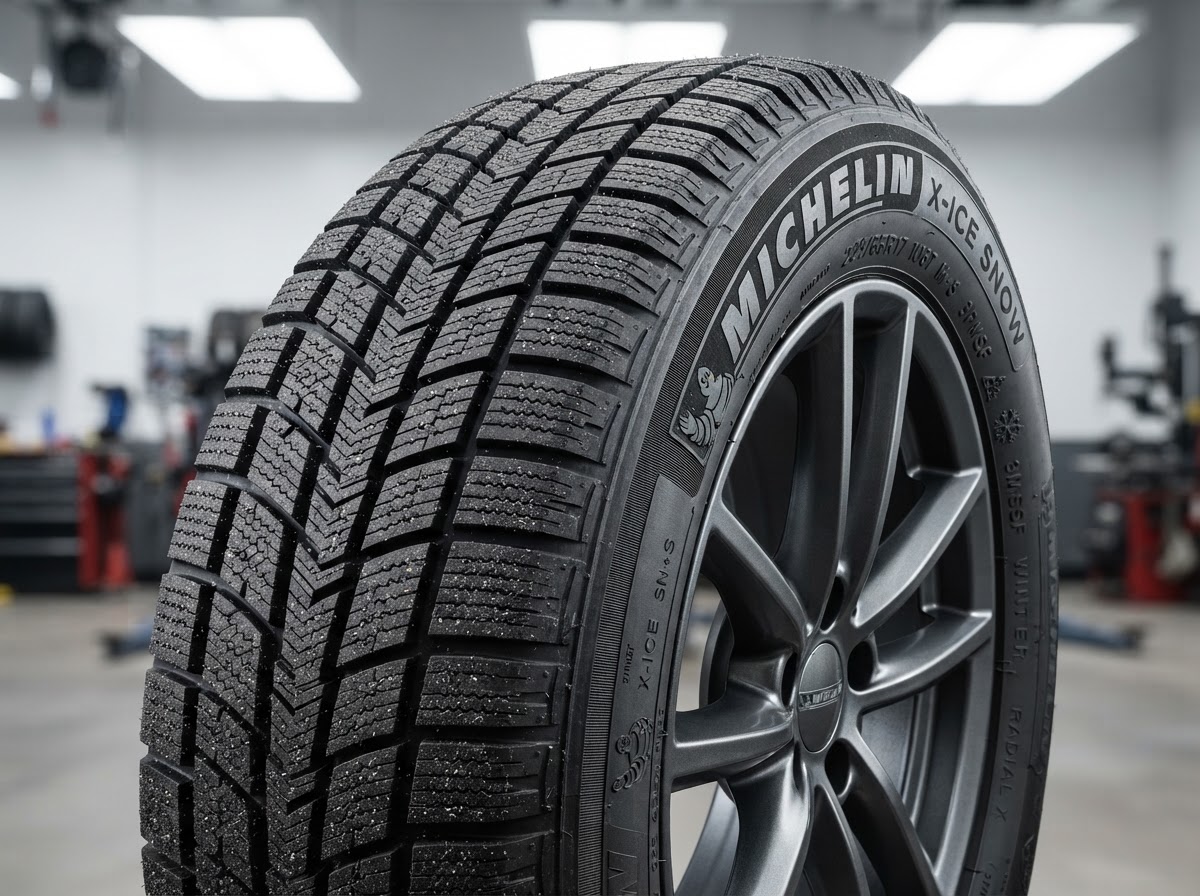
Deep circumferential grooves clear standing rain and slush effortlessly. Full siping provides optimal snow and ice bite.
Tread is fine for dry highway summer driving, but hydroplaning resistance in heavy rain drops significantly. Winter slush packing begins to overcome groove capacity.
Stopping distances in 60mph rain increase by more than 80 feet compared to full tread. Sipes are almost entirely worn flat.
Wear bars are flush with the tread blocks. Zero hydroplaning protection. High puncture and blowout vulnerability.
Insert a quarter into your tire groove with Washington's head facing down. If the top of his head is covered by tread, you have at least 4/32″ remaining. If his head is entirely exposed, you have less than 4/32″ — your tires need replacement before driving on winter slush.
Check your tread before the first hard freeze.
Daylight saving time ended Sunday, November 1. Temperatures are steadily dropping into the 40s and 30s, and winter road salt, freezing rain, and holiday trips are only weeks away. Drivers are thinking about road grip now — and a tread check before the freeze is the honest seasonal job.
Enter your tire size for an all-in quote in minutes.
What every Treadline tire quote includes.
An all-in quote that hides fitting fees, valve fees, or disposal surcharges is the exact opposite of our brand. When we give you a quote for four tires, this is what is done.
Fitting that is fast, without ever being rushed.
We operate a clean, dedicated tire workshop. We don't take on heavy engine rebuilds, transmission jobs, or body repairs. Because we focus exclusively on tires, wheels, and wheel balancing, our bays move methodically and efficiently.
A typical set of four tires takes 45–60 minutes from vehicle check-in to final hand torque.
We never hammer lug nuts with uncalibrated pneumatic guns. Each bolt is snugged evenly in a cross pattern to protect brake rotors from warping.
Every tire pulled off the car is visually walked through with the owner. If only two tires are worn, we place fresh rubber on the rear axle as recommended by tire manufacturers.
Real customer feedback, never fabricated numbers.
Treadline maintains a strict no-fabrication policy. We never invent fake star ratings, fictitious reviews, or phantom awards. As customer reviews are verified, they appear directly below.
"Customer testimonial placeholder — replace with verified customer quote upon submission of initial winter season reviews."
"Review placeholder — replace with verified customer feedback regarding all-in quote accuracy and fitting turnaround."
Every customer receives an itemized printout showing before-and-after tread measurements, wheel balancing readouts, and final lug torques.
Get an honest tire quote.
Tell us your vehicle and tire size. We return an all-in quote comparing 2–3 vetted tire options with mounting, balancing, new stems, and disposal included. No hidden line items.
Frequently Asked Questions
Straight answers to the questions drivers ask every day heading into winter.
How do I know if I actually need new tires?
Tires should be replaced when tread depth reaches 4/32″ for winter driving (or 2/32″ legal minimum for summer), when sidewall dry rot or cracking appears, or when tires exceed 6 years of manufacture age regardless of tread. We measure all 4 tires across 3 groove points for free.
Where do I find my exact tire size?
Open the driver-side front door. On the door jamb or sill pillar, there is a federal tire and loading information sticker. It lists your factory tire size (e.g. 215/60R16). You can also read the raised lettering on your current tire sidewall.
Winter tires vs. all-season tires: which one do I really need?
If you regularly commute in temperatures below 45°F (7°C), encounter unplowed snow, or drive hilly winter terrain, dedicated winter tires or 3-Peak Mountain Snowflake (3PMSF) all-weather tires provide dramatically shorter stopping distances. Standard all-season rubber becomes stiff like hockey pucks below freezing.
Can you repair a flat, or does the tire need replacing?
We repair punctures strictly within the RMA (Rubber Manufacturers Association) guidelines: the puncture must be 1/4″ (6mm) or smaller and located entirely inside the tread crown. Punctures in the shoulder, edge blocks, or sidewall cannot be safely patched and require tire replacement.
What does the Treadline quote include?
Every quote is complete: new tires, touchless machine mounting, dynamic spin balancing, brand new valve stems or TPMS rubber seals, and eco-friendly disposal of your old tires. There are no hidden shop fee add-ons at the counter.
How long does tire fitting take?
Fitting a standard set of four tires typically takes 45 to 60 minutes. We calibrate wheel balancers daily and hand-torque every lug nut to vehicle specification using calibrated torque wrenches.
What if my TPMS dashboard warning light is on?
We inspect sensor battery life and scan diagnostic trouble codes during tire change. If a sensor is dead or damaged, we quote replacement sensor modules directly (confirm specific vehicle sensor pricing with Treadline).